Scratching in walls or ceilings
Nighttime movement often points to attic or wall-void activity. We track where the noise lines up with rooflines, soffits, and plumbing penetrations.
Serving Bolivar, Tennessee & surrounding areas
Mon–Fri 8am–6pm · Sat 9am–2pm
Rodent control in Bolivar, Tennessee
If you are hearing scratching in the walls, finding droppings, or seeing gnaw marks, we can inspect, identify the entry points, and stop the problem at the source with trapping, exclusion, and cleanup guidance.
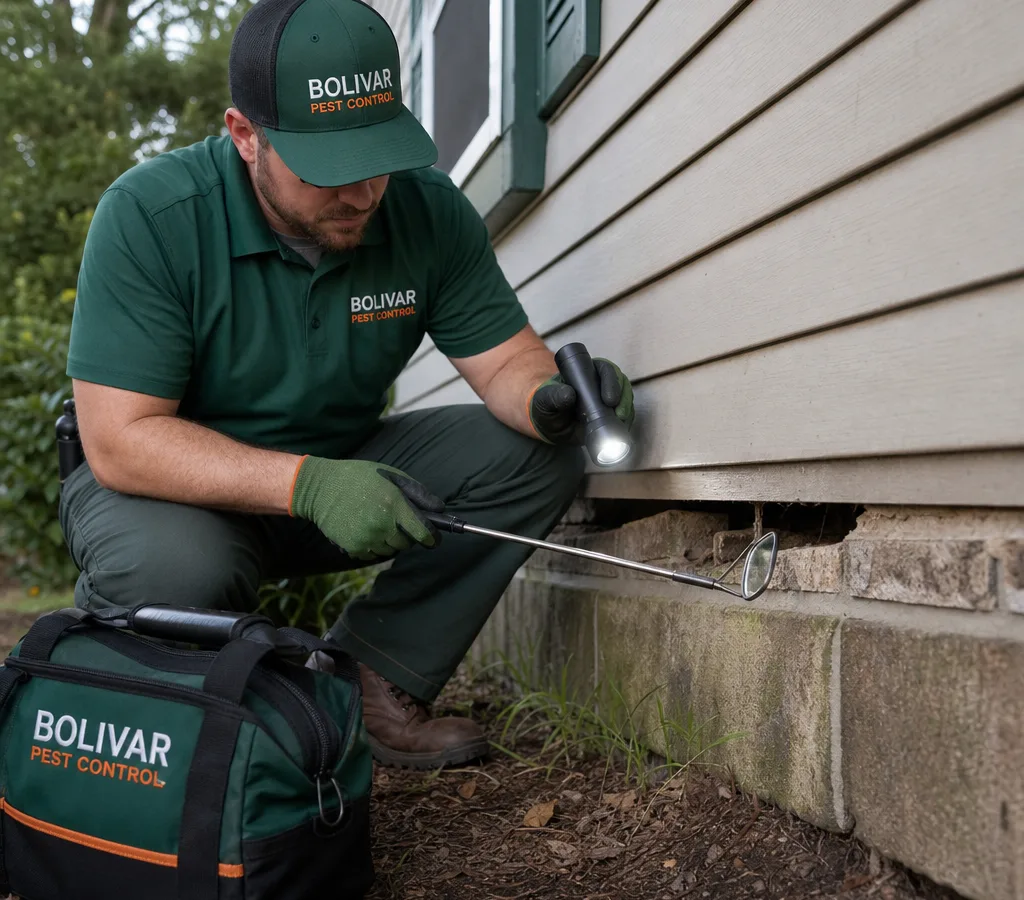
Remove them and keep them out
Rodent control in Bolivar TN usually comes down to two things: removing the animals that are already inside and closing the routes that let them return. Store-bought bait and a couple of snap traps can catch a mouse, but they rarely solve the bigger issue of hidden entry points, food sources, and nesting areas.
Bolivar Pest Control handles rodent issues for homes and small businesses around Bolivar, starting with a practical inspection and a written plan. We look for the signs that tell us what you are dealing with—mice, rats, or both—where they are traveling, and why the building is attractive to them. Then we use a mix of trapping and exclusion work so the result is stable, not temporary.
If you are also looking for year-round protection from common household pests, our team can help with broader pest control in Bolivar TN while keeping this visit focused on rodents and the steps that stop them.
A complete removal strategy
A reliable rodent service is a system, not a single product. Here is what we typically address during rodent control service in Bolivar:
If you are hearing activity at night or noticing a musky odor, it is usually worth acting quickly. Rodents reproduce fast, and the longer they are inside a structure, the more time they have to contaminate insulation and chew wiring.
Nighttime movement often points to attic or wall-void activity. We track where the noise lines up with rooflines, soffits, and plumbing penetrations.
Fresh droppings near food storage, under sinks, or in pantry corners usually mean active travel routes that need trapping and entry-point work.
Chewed packaging, foam, or cardboard and shredded paper or insulation are classic nesting signs. We locate the nesting zone and set traps to intercept runways.
Rats and mice leave dark rub marks along repeated paths. Those marks help us place traps where rodents already feel comfortable moving.
Dogs and cats often fixate on an appliance toe-kick, a closet corner, or a fireplace chase. That clue can narrow the search fast.
A persistent urine smell in a cabinet, closet, or garage can indicate ongoing activity. We pair removal with guidance on cleaning and deodorizing safely.
We start by walking the exterior and key interior areas to find entry points, nesting zones, and travel runways. You will know what we found and why it matters.
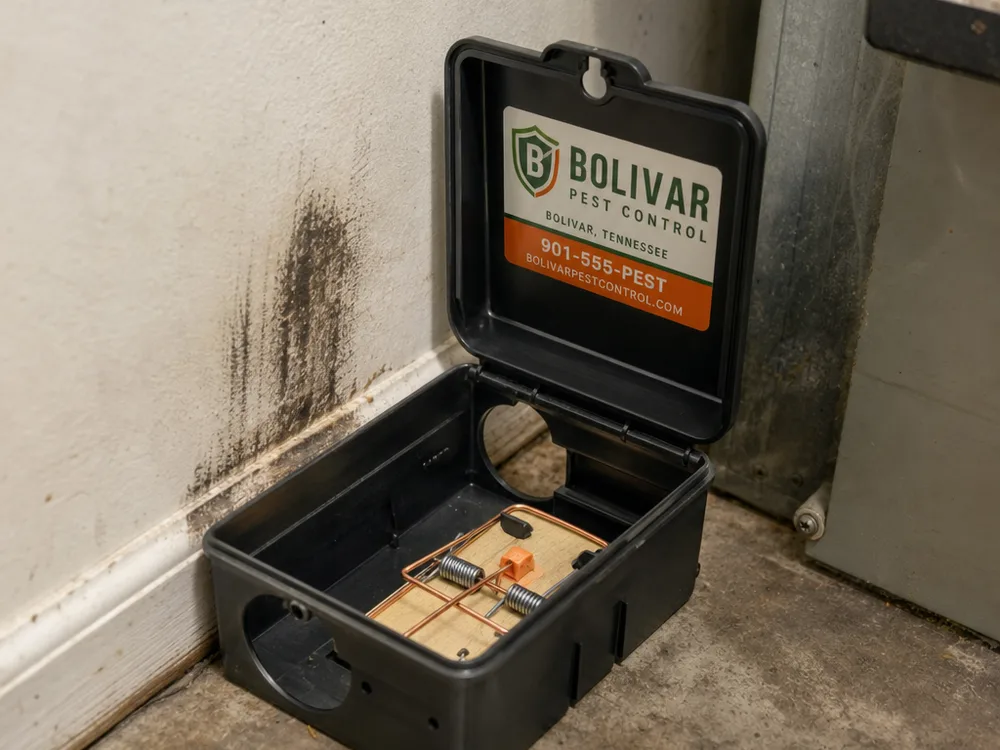
We place traps along walls, behind appliances, in attics or crawl spaces when appropriate, and at other high-probability points based on the inspection.
When feasible, we recommend sealing the openings that are letting rodents in. We also point out attractants like accessible food and heavy clutter that creates harborage.
Rodent control often needs at least one follow-up to confirm capture results, move traps if activity shifts, and verify that entry-point work is holding.
Planning the service
Rodent control in Bolivar typically ranges from about $150 to $600+, depending on whether you need a one-time trapping visit or a multi-visit plan with exclusion work. A straightforward mouse issue with limited activity is usually on the lower end, while rats, attic involvement, or multiple entry points push costs higher.
Your price mainly depends on the size of the structure, where activity is present—kitchen, attic, or crawl space—how many traps and visits are needed, and how much sealing or repair is required to block access. Exact pricing is confirmed after an on-site inspection so the scope matches the problem.
Homeowner experiences
“We kept hearing scratching over the bedroom and found droppings in the pantry. They located where the mice were getting in, set traps in the right spots, and explained what to seal and what to change with food storage. The noise stopped within days and the follow-up confirmed everything was clear.”
“They treated it like an investigation instead of guessing. The inspection showed an opening near the garage and activity in the attic. Once those areas were addressed, we stopped seeing signs of rodents.”
Helpful answers
Yes. We inspect first to confirm whether you have mice, rats, or both, then tailor trapping and exclusion to that species and the areas of activity—kitchen, attic, crawl space, or garage.
Many situations show a noticeable drop in activity within a few days, but full resolution depends on how many rodents are present and whether entry points are sealed. If animals can keep getting in, trapping becomes an ongoing cycle, so we prioritize exclusion recommendations early.
When bait is appropriate, we discuss it before placement and use safety-minded methods based on the layout and household. In many cases, mechanical trapping is the primary tool because it provides clear results and can be placed in controlled locations.
We frequently find gaps around utility lines and HVAC penetrations, openings at garage door corners, damaged vents, and small holes along foundations or siding transitions. During the inspection we point out the specific access points on your structure so sealing work targets what rodents are using.
Usually no. Most rodent work involves inspection and trap placement, and you can stay home as long as we have access to the affected areas like the attic, crawl space entry, garage, and kitchen.
We can advise on safe handling of droppings and contaminated materials and discuss next steps if insulation or stored items have been affected. The right approach depends on how widespread the contamination is and whether there is ongoing activity.
If you want rodent control that lasts, start with an inspection that finds how they are getting in, not just where they are being seen.
Check AvailabilityStop the return route
Tell us what you have noticed, where you are seeing signs, and how long it has been going on. We will schedule an inspection, explain the options, and outline the next steps for trapping and exclusion.