Inspection that targets the usual entry points
We look closely at foundation-to-framing transitions, crawl space conditions, attached garages, and any place wood stays damp or touches soil.
Serving Bolivar, Tennessee & surrounding areas
Mon–Fri 8am–6pm · Sat 9am–2pm
Termite service in Bolivar, Tennessee
Protect your home with a clear plan: a careful inspection, the right treatment method, and follow-up options that fit your property and budget.
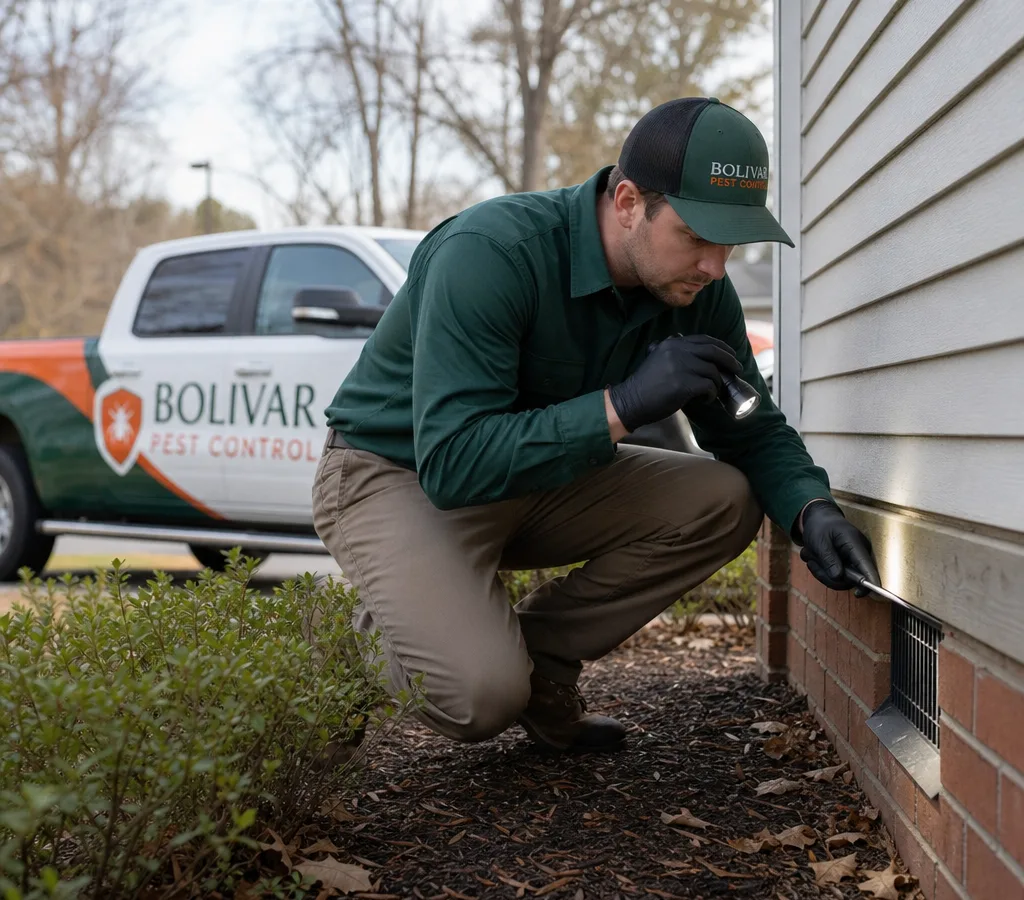
Start with the evidence
If you are searching for termite treatment Bolivar TN, you are usually trying to answer two questions fast: is this really termites, and how do I stop them before more wood is damaged. Bolivar Pest Control focuses on inspection-first termite control so the treatment matches the conditions at your home, not a one-size plan.
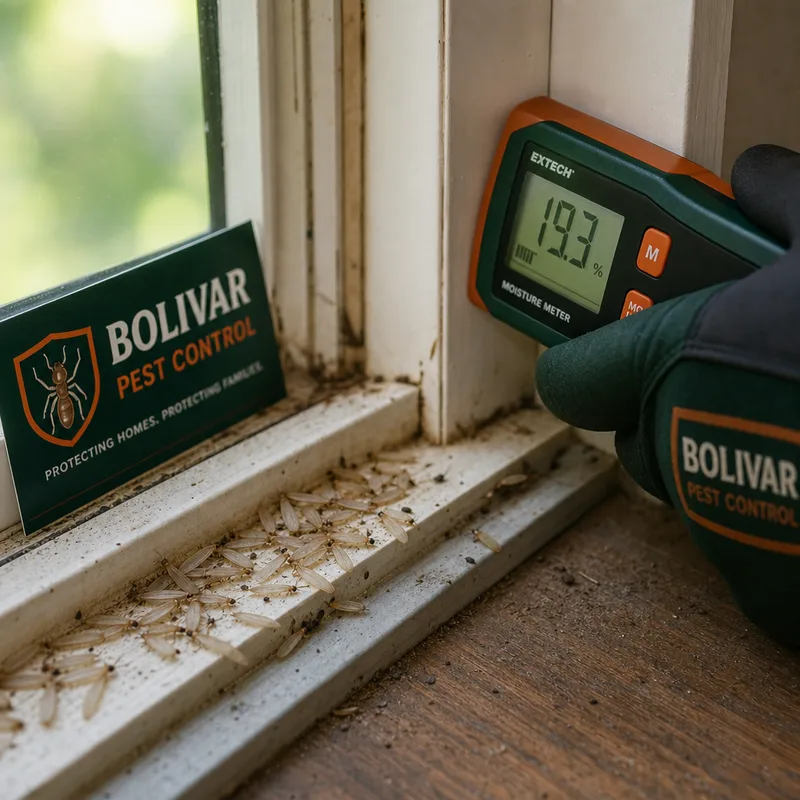
Termites can work out of sight for a long time. The most common warning signs homeowners notice are mud tubes on foundation walls, shed wings near windowsills or doors, soft or hollow-sounding wood, blistering paint that looks like water damage, or sticking doors in areas with hidden damage. If you have any of those symptoms, the next step is a thorough inspection of the structure, crawl space, attached garage, and any spots where wood meets soil or stays damp.
We are based at 645 Lucy Black Road in Bolivar, TN 38008, so scheduling and follow-up are straightforward for local homes and small businesses.
Treatment matched to the structure
Effective Termite Control Bolivar TN starts with identifying the termite type and where they are traveling. In West Tennessee, the conditions that matter most are moisture and hidden access points: crawl spaces with high humidity, wood-to-soil contact, porch steps or deck posts that touch the ground, and areas where plumbing penetrations or expansion joints give termites an entry route.
After inspection, treatment may include:
We will explain what we found, where activity is likely concentrated, and what method fits the structure. If you are also comparing providers, you can get a feel for how we approach inspections and service communication across pest control in Bolivar TN as well.
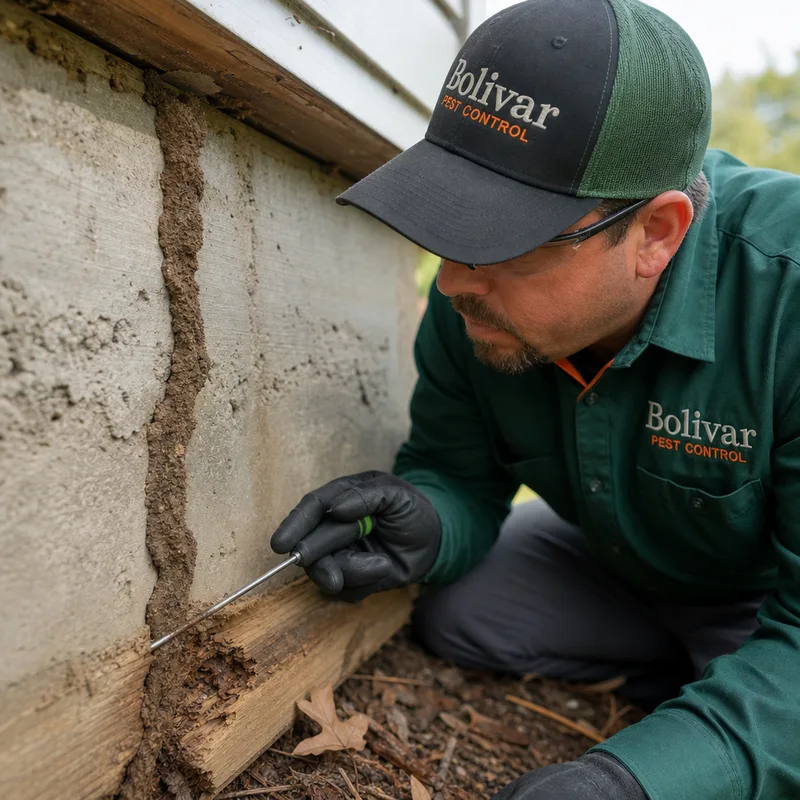
We look closely at foundation-to-framing transitions, crawl space conditions, attached garages, and any place wood stays damp or touches soil.
You will know whether a soil barrier, baiting, or a mixed approach makes the most sense for your home's layout and access.
When trenching or drilling is required, we walk through what will be disturbed, where repairs may be needed, and how we keep disruption low.
We can provide a written scope based on what we inspected so you have clear next steps, especially useful when selling or buying a home.
We point out moisture and construction factors that attract termites, like wood-to-soil contact and poor crawl space ventilation, so you can reduce risk long-term.
We start with a few questions about what you are seeing—wings, tubes, soft wood, recent remodeling, and crawl space access—so we arrive ready to inspect the right areas.
We inspect the exterior foundation line, interior hotspots, crawl space or basement areas if present, and attachments like porches or decks that can bridge termites to the structure.
You get a clear explanation of evidence found, likely travel routes, and the recommended treatment method with any prep steps needed before we start.
Depending on the plan, we install a liquid barrier, place and map bait stations, and address access points. We keep you informed about what we are doing and why.
Termite control is not a one-and-done decision. If your plan includes baiting or ongoing coverage, we set expectations for inspection intervals and explain which property changes can affect performance.
Planning the investment
Termite treatment in Bolivar typically ranges from about $600 to $2,500+, depending on the method and the home's size and construction. A smaller, straightforward liquid perimeter treatment often falls in the lower end, while larger homes, complex foundation layouts, limited crawl space access, or baiting plans with ongoing monitoring can push costs higher.
Final price is driven by linear footage, drilling or trenching needs, moisture and damage conditions, and how easy it is to reach the areas that must be treated; the exact cost is confirmed after the on-site inspection.
Inspection details
Helpful answers
Scheduling depends on inspection availability, but the fastest path is to book an inspection first so the treatment can be planned correctly. If you are dealing with active swarmers, mud tubes, or new damage, mention that when you reach out so we can prioritize the visit and come prepared for the most likely treatment options.
Both methods are used, and the right choice depends on the structure and access. Liquid soil treatments create a treated zone along the foundation and can be a good fit when we can reach the soil consistently; baiting can be a better match when trenching or drilling is limited or when a monitoring-based approach is preferred.
Make crawl space access available, move stored items away from foundation walls where possible, and note where you have seen wings, tubes, or soft wood. If there is a crawl space door, attic access, or a locked gate, having those accessible helps the inspection stay thorough and efficient.
Sometimes, yes, but only when it is necessary to reach the soil where termites travel. Homes with slab construction, attached garages, or certain porch and patio designs may need drilling at specific points to complete the treated zone; we will explain exactly where and why before any drilling starts.
Termite control stops activity and helps prevent further damage, but structural repairs are typically a separate scope. We can document what we observe during the inspection so you have a clear record to share with a contractor if repairs are needed.
In many cases, yes, because treatment focuses on the soil and entry routes, not removing finishes. The main limitation is access: if the crawl space is extremely tight or blocked, we may need prep steps to reach the areas that must be treated safely and effectively.
Protect the structure
Tell us what you have noticed and when you can provide access to the crawl space or key areas. We will confirm findings, explain treatment options, and give you a clear plan for protecting the structure.